
Freezing can make keto meal prep more manageable, but some dishes freeze and reheat better than others. Many keto and low-carb meals can be frozen. Let food cool completely and pack it in airtight containers to help preserve quality. Cream, cheese, and eggs can change a dish’s texture after freezing, so plan for how you’ll reheat it.
Repeating breakfast through the week can reduce morning decisions, especially when you prepare several portions at once. This guide explains which meals generally freeze well, what to expect from dishes made with cream, cheese, or eggs, and how to store, thaw, and reheat portions carefully.
You’ll also find practical breakfast ideas for a weekly routine, from egg-based dishes to other make-ahead options. Build a simple plan around the foods you enjoy and the time you have.
Key Takeaways
- Choose a small rotation of breakfasts you enjoy, such as egg muffins or chia pudding, to make weekday mornings easier to plan.
- Pick batch-cooked recipes that hold up to freezing and reheating, then portion them for the meals you need.
- Cream, cheese, and eggs can affect a dish’s texture after freezing, so consider how each recipe may reheat before making a large batch.
- Plan thawing time as part of meal prep; larger portions may need up to 24 hours or longer in the refrigerator.
1. Breakfasts repeated throughout the week
A steady breakfast rotation can make weekday eating easier to organize. Choose two options with different textures, such as egg bites and chia pudding, then prepare portions ahead. Keto egg bites can be reheated in a microwave in 2–3 minutes. Egg muffins also keep in the refrigerator for several days, making them useful for short-term prepping. For a heartier option, add chicken and leafy greens to an egg bake, then portion it after cooking.
Low-carb pancakes offer another make-ahead choice. One recipe uses 2 cups of almond flour and 3 eggs, with the batter blended for 1–2 minutes until smooth. Cook each pancake for 3 minutes before flipping, then cook the second side for 2 minutes. Let pancakes cool before storing them in portions. Reheat one portion when needed, and add toppings at serving time to keep the texture pleasant. A creamy topping can make breakfast feel delicious without turning the batch into a complicated recipe.
For a simple routine, assign each prepared breakfast a place in the week. Put egg bites in easy-to-reach containers, and keep pancake portions separate from toppings. Chia seed pudding is another option; one listed serving provides 21 grams of protein. A keto yogurt parfait bowl takes five minutes to assemble, so you can prepare its components ahead and combine them before eating. This keeps crunchy additions from softening too soon.
Batch cooking works best when recipes suit your schedule and appetite. Start with one egg-based dish and one alternative rather than preparing a full week of breakfasts you may not want. If you’re new to keto, changing your eating pattern may affect your health and may not suit every situation. If you have a medical condition or take medication, discuss the change with a qualified health professional before starting. Keep your first keto meal prep simple, then adjust your breakfast choices based on what you enjoy and actually finish.
2. Can you freeze keto and low-carb meals?
Yes. Soups, chili, cooked proteins, and stuffed peppers are practical freezer choices. For example, freeze keto chili in single-meal portions, or pack stuffed peppers separately for easy dinners. Let cooked food cool, then transfer it to airtight containers. Label each one with its contents so you can find a meal without opening several packages.
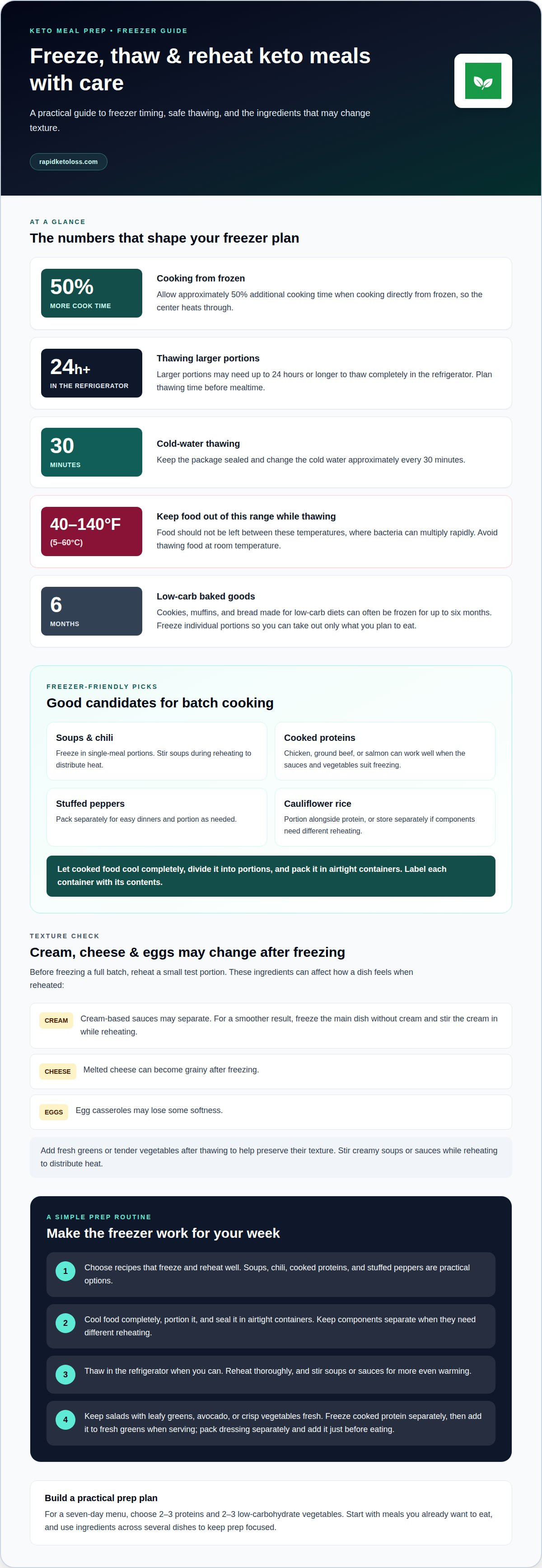
Recipes with cooked chicken, ground beef, or salmon can work well when their sauces and vegetables suit freezing. Cauliflower rice is another useful side to portion alongside protein. Thaw a meal in the refrigerator before reheating when you can. If cooking directly from frozen, allow approximately 50% additional cooking time so the center heats through. Stir soups during reheating to distribute heat and help the texture stay even.
Not every keto lunch freezes well. Salads with leafy greens, avocado, and crisp vegetables are better assembled fresh because freezing can soften their ingredients. Freeze cooked protein separately, then add it to fresh greens when serving. For lunch meal prep, pack dressing in a separate container and add it just before eating to keep the salad from becoming soggy.
To simplify your ingredient choices, use foods across several meals, such as eggs, cabbage, cauliflower, or ground beef. Plan your grocery list around recipes you intend to cook, then combine overlapping ingredients in different ways through the week.
Easy options include egg bites for breakfast, turkey lettuce wraps or salmon with lemon-kale salad for lunch, and chili for dinner. These choices add variety while keeping prep focused on a few ingredients.
Choose one freezer-friendly lunch and one dinner recipe to start. If you want more help choosing low-carb ingredients and building a beginner routine, explore beginner-friendly keto guidance.
3. Freezing meals with cream, cheese, and eggs
Cream, cheese, and eggs can change texture after freezing, so reheat a small test portion before freezing a full batch. Cream-based sauces may separate, melted cheese can become grainy, and egg casseroles may lose some softness. For a smoother result, prepare the sauce without cream, freeze the main dish, then stir in the cream while reheating. Add fresh greens or tender vegetables after thawing to preserve their texture.
Batch cooking still works well for dishes with these ingredients. Cool each meal completely, divide it into portions, and seal it in an airtight container before freezing. Label containers with the dish and date. A common food-safety mistake is leaving food to thaw at room temperature; food should not be left between 40 °F and 140 °F (5 °C and 60 °C), where bacteria can multiply rapidly. Thaw larger portions in the refrigerator. According to the U.S. Department of Agriculture, Food Safety and Inspection Service, larger portions may need up to 24 hours or longer to thaw completely in the refrigerator.
If you thaw sealed food in cold water, keep the package closed and change the water approximately every 30 minutes, according to the U.S. Department of Agriculture, Food Safety and Inspection Service. Avoid refreezing food that has been thawed carelessly or left out. Reheat a portion thoroughly, and stir creamy soups or sauces to distribute heat. These steps help reduce uneven warming and avoid wasting a favorite recipe.
Cookies, muffins, and bread made for low-carb diets can often be frozen for up to six months. Freeze them in individual portions so you can take out only what you plan to eat. Store cooked protein, cauliflower rice, and chopped vegetables separately when they need different reheating. Separating components makes it easier to put together a fresh-tasting meal without freezing everything together.
4. Keto meal prep for beginners
Start with ingredients you can combine in different ways, rather than cooking a separate recipe for every meal. For a seven-day menu, choose 2–3 proteins and 2–3 low-carbohydrate vegetables. Ground beef, chicken, cauliflower, and leafy greens can form the base. Check your kitchen first, then write a grocery list around meals you already want to eat. This keeps the plan practical and helps limit unused ingredients.
Set aside a day for cooking and prep. Cook proteins in batches, chop vegetables, and prepare a side such as cauliflower rice. Roast cauliflower with butter and parmesan for a different flavor, or leave it plain to pair with more strongly seasoned dishes. Divide cooked food into portions that match your usual meals. Keep sauces and delicate ingredients separate so you can vary the flavor without cooking another full recipe.
To plan a seven-day menu, write down breakfast, lunch, and dinner for each day, then reuse prepared ingredients in different combinations. For example, use ground beef in chili one day and stuffed bell peppers another. Pair cooked salmon with fresh greens for lunch instead of freezing a dressed salad. Plan a leftover meal to use open containers before cooking another dish. The goal is a workable routine, not seven entirely different recipes.
Keep track of carbohydrates across the full day, including sauces and packaged ingredients. The meal guidance describes keto as 20 grams of carbohydrates or less per day, so check labels and portion sizes as you plan. Adjust the menu if a recipe leaves you short on variety or takes too much cooking time. Start with a few familiar dishes, then expand as you learn which meals fit your schedule. For help with the basics, build your beginner keto routine.
KETO RAPIDWEIGHT LOSS: Beginner-friendly keto guidance
KETO RAPIDWEIGHT LOSS offers beginner-friendly keto guidance for readers who want to understand the basics behind everyday food choices. After planning breakfasts, freezer meals, and a weekly menu, you may want more context on keto ingredients, grocery shopping, or common beginner mistakes. Its educational resources can help you build that foundation at your own pace. Use them to inform your choices, not as a substitute for personalized medical or nutrition advice. If you’re considering a major dietary change and have health concerns, speak with a qualified health professional.
For practical guidance as you continue learning, visit KETO RAPIDWEIGHT LOSS.
Build a routine that fits your week
Your first plan is a starting point, not a rule you have to follow unchanged. Notice which meals you enjoy, which take too much effort, and what you reach for on busy days. Use those observations to shape your next round of keto meal prep. A shorter rotation you can maintain may work better than a complicated menu.
Give yourself room to adjust. You might keep a familiar breakfast while changing lunches, or prepare fewer portions until you know how your schedule feels. The useful measure is whether your routine supports your everyday needs, not whether every meal is perfectly planned. If you want a clearer foundation for making those choices, explore beginner-friendly keto guidance from KETO RAPIDWEIGHT LOSS.
Take the next step at a pace that works for you. Small, considered changes can help you build a manageable routine.
Frequently Asked Questions
Can you freeze keto and low-carb meals?
Yes, freezing can keep prepared meals on hand for days when cooking isn’t practical. Think about how you’ll finish each dish after reheating: freeze a soup base on its own, then brighten it with fresh herbs or a squeeze of lemon. That finishing touch adds contrast and lets one prepared base work in different meals.
How long can foods be kept frozen?
There’s no single storage duration that suits every frozen food. Ingredients, packaging, and freezer conditions all affect how well a dish keeps its quality. Don’t apply a guideline for one type of food to every meal. Plan to use frozen portions while their texture and flavor still appeal to you, and follow any storage directions supplied with packaged ingredients.
What containers are best for freezing foods?
Choose a container designed for freezer storage, and leave room at the top if its contents may expand. Avoid filling jars or rigid containers to the brim. If you plan to reheat food directly in the same dish, check that the container is suitable for that use. Choosing a container that fits the portion also makes serving easier.
What should you avoid freezing?
Foods prized for a crisp, watery bite can become limp after thawing. Add raw cucumber and radish fresh at serving time rather than freezing them as part of a prepared dish. This matters most when texture is central to the meal. Keep these ingredients separate and add them after reheating to retain their crunch.
Which low-carb recipes work best for batch cooking?
Self-contained recipes are useful for batch cooking. Spaghetti squash pasta is one example; a batch makes four servings. Prepare the recipe, then divide it into portions that suit your meals. Before making a larger batch, consider whether you like its texture after reheating. A small trial portion can help you decide.
What are the best foods and ingredients for keto meal prep?
Keep versatile ingredients on hand, including olives, nuts, seeds, olive oil, and low-carb fruits. They can add variety to meals or snacks without relying on the same combination every day. Choose foods you enjoy and use them to complement planned dishes. Check packaged products for carbohydrate content when that information matters to your daily choices.

