

A keto diet meal plan for beginners can make lower-carbohydrate food choices easier to organize, but keto may not suit everyone. It may not be appropriate if you’re breastfeeding, under 18, aged 80 or older, or have a BMI below 18.5.
This guide explains how meal-planning approaches differ and how to include non-starchy vegetables while reducing carbohydrates. You’ll also find practical ways to plan meals around your preferences and routine.
Key Takeaways
- Consider whether keto suits your circumstances before planning meals, and get professional guidance when health conditions or medications may affect your choices.
- Choose a meal-planning approach that feels manageable, then pay attention to how your energy and health respond.
- Build meals around protein and non-starchy vegetables, and track carbohydrates using food labels and consistent serving sizes.
- Plan a few simple meals ahead, make a grocery list, and adjust the menu to fit your routine.
Who is a keto diet plan for?
A beginner keto grocery list might include eggs, chicken, fish, cheese, leafy greens, broccoli, zucchini, avocado, olive oil, and unsweetened nuts. Choose foods for the meals you plan to make, then check labels for added sugars and carbohydrate amounts.
- Consider whether keto fits your situation. Avoid following a keto diet while breastfeeding. It may not be appropriate if you’re under 18, aged 80 or older, or have a BMI below 18.5. If you take insulin or a sulfonylurea, cutting carbohydrates below 20 grams can lower blood sugar too far. SGLT2 inhibitors also raise ketoacidosis risk, even when blood sugar appears normal.
- Build breakfast from simple ingredients. Try a two-egg omelet with spinach and cheese, or eggs with avocado. For a make-ahead option, bake egg bites with chopped greens and cheese, then refrigerate them for busy mornings.
- Plan filling lunches and dinners. Pair chicken, fish, or eggs with greens or roasted broccoli. Add olive oil or avocado for flavor. Keep portions moderate and choose unsweetened dressings to avoid hidden sugars.
- Know what to limit. Bread, rice, pasta, sugary drinks, and sweetened sauces can use up a carbohydrate allowance quickly. Check packaged-food labels, since ingredients and serving sizes affect the total.
- Make dining out easier. Choose grilled chicken or fish with salad or non-starchy vegetables. Ask for sauces on the side, and swap fries or bread for greens when the menu allows.
- Sketch a seven-day menu. Rotate omelets, chicken salads, fish with broccoli, and bun-free burgers with greens. Repeat a few meals, then write a grocery list from those ingredients.
- Pay attention to health changes. Ketosis is not the only measure of whether a diet suits you. If you’re monitoring blood sugar or cholesterol, discuss relevant results and medication changes with a health professional.
Are there different types of keto meal planning?
- Choose a planning pattern. A consistent ketogenic approach keeps meals low in carbohydrates day to day. A cyclical approach may use five ketogenic days followed by two high-carbohydrate days. The second pattern involves planned changes across the week, so consider whether that schedule fits your routine before adopting it.
- Track patterns, not isolated readings. Keep a simple record of meals, energy, digestion, and weight. Compare similar days and note changes that persist. A single reading can reflect short-term variation, while a steady record helps you discuss your experience more clearly with a health professional.
- Notice digestion and food variety. Record bowel changes alongside the foods you eat. Include varied non-starchy vegetables and sources of fiber that fit your chosen carbohydrate target. If a restrictive menu narrows your choices, adjust the ingredients rather than relying on the same few foods every day.
- Review cholesterol results in context. If cholesterol is part of your health monitoring, keep track of test results and discuss meaningful changes with a qualified professional. A food diary can help connect meal patterns with results. Avoid assuming that one ingredient explains a change on its own.
- Set a realistic weight-management focus. Use weight as one measure, alongside energy and how manageable your routine feels. A meal pattern should be practical enough to follow consistently. If tracking becomes stressful or distracts from daily life, simplify your records and focus on sustainable eating habits.
- Weigh potential benefits against practical limits. Some people choose a ketogenic pattern to change their food routine or pursue weight loss. It also requires ongoing attention to food choices and health changes. Consider how the approach fits your needs, preferences, and ability to maintain it over time.
- Use educational support for planning. When you need help understanding keto basics or comparing approaches, beginner-friendly keto guidance can help you explore the choices at your own pace.
Reducing carbohydrates while eating non-starchy vegetables
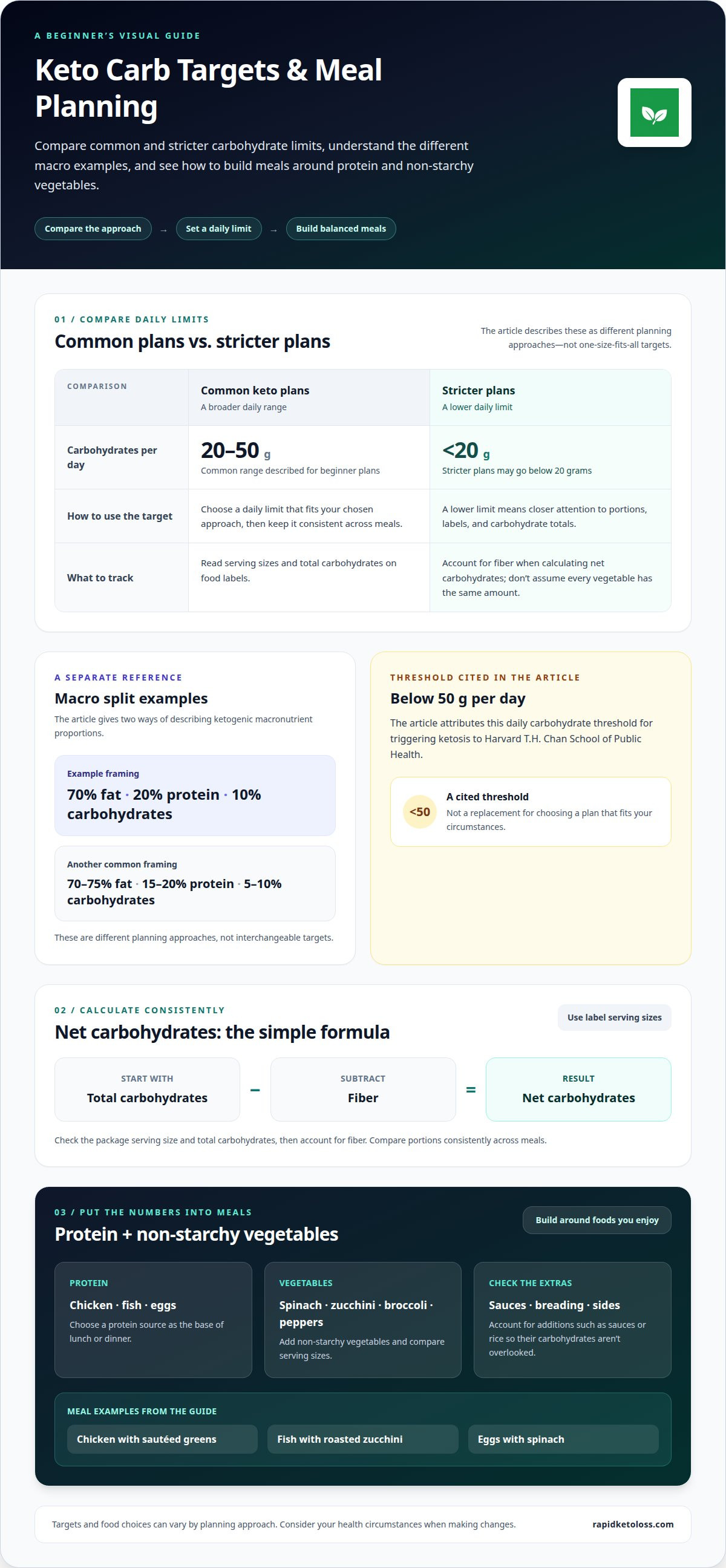
For beginners, common keto plans limit carbohydrates to 20-50 grams per day, while stricter plans go below 20 grams. Build meals around protein and non-starchy vegetables, and track net carbohydrates consistently.
-
Set Carbohydrate and Macronutrient Targets
Choose a target style before adjusting portions. A standard ketogenic diet is described as 70% of daily calories from fat, 20% from protein, and 10% from carbohydrates. Another common framing is 70-75% fat, 15-20% protein, and 5-10% carbohydrate. Harvard T.H. Chan School of Public Health says daily carbohydrate intake must fall below 50 grams to trigger ketosis; stricter protocols go as low as 20 grams. These are different planning approaches, not interchangeable targets.
-
Establish a Daily Net Carb Limit
Pick a daily limit that matches your chosen approach, then keep it consistent across meals. Net carbohydrates are calculated by subtracting fiber from total carbohydrates. A strict plan may set a limit under 20 grams per day, while other standard plans use 20-50 grams per day. Read serving sizes and total carbohydrates on labels, then account for fiber rather than assuming every vegetable has the same net amount.
-
Plan Low-Carbohydrate Lunches and Dinners
Build lunch and dinner around a protein source, then add non-starchy vegetables such as spinach, zucchini, broccoli, or peppers. For example, pair chicken with sautéed greens or fish with roasted zucchini. Compare serving sizes using food labels or a carbohydrate tracker to keep meals within your daily target. At breakfast, eggs with spinach follow the same approach. Check sauces and breading, and account for sides such as rice so their carbohydrates aren’t overlooked.
A sample beginner keto meal plan
Use this sample keto diet meal plan for beginners as a planning template, not a fixed prescription. Choose portions and ingredients that suit your appetite, food preferences, and daily carbohydrate target.
- Set up a repeatable breakfast. For day one, make a two-egg omelet with spinach and cheese. On another morning, use egg white omelet bites baked in a 12-cup muffin tin at 350°F for 18-20 minutes. Add butter or olive oil for cooking, and prepare extra portions for later breakfasts.
- Rotate simple lunches. Pair chicken, tuna, or eggs with leafy greens, cucumber, and a low-carbohydrate dressing. A lunch can be assembled from leftovers, too. Check the dressing label, since added sugar can raise carbohydrate intake without making the meal feel more filling.
- Plan dinners around a protein. Serve roasted chicken with broccoli, or fish with sautéed spinach. For a stuffed chicken option, bake at 375°F for 18-22 minutes and confirm it reaches 165°F internally. Let it rest for about 5 minutes before serving.
- Give the seven days a simple rhythm. Repeat breakfasts that are easy to prepare, alternate chicken and fish dinners, and use leftovers for lunch. For example, roast chicken one evening, then add it to greens the next day. This keto diet meal plan for beginners can make shopping and preparation easier when you repeat a few meals.
- Prepare ingredients ahead. Wash spinach, chop vegetables, and portion ingredients before the week begins. Keep a written list of meals and ingredients, then check each item’s label when packaged foods are involved. This helps you compare serving sizes and track your carbohydrate intake consistently.
- Adjust the template to your needs. A ketogenic menu should provide enough food and protein for your routine. If you have diabetes or take medication that affects blood sugar, discuss diet changes with your healthcare professional before using the plan. For practical meal-planning ideas, explore beginner-friendly keto guidance.
KETO RAPIDWEIGHT LOSS: Beginner-friendly keto guidance
KETO RAPIDWEIGHT LOSS offers beginner-friendly keto guidance for readers looking to put basic principles into practice. Once you’ve considered meal structures and carbohydrate targets, explore the educational guides, grocery lists, recipes, and meal ideas to find practical next steps at your own pace.
Use these resources to learn about keto basics, read food labels, and avoid common beginner mistakes. They can support your planning, but they don’t replace personalized medical or nutrition advice, custom meal plans, or one-to-one coaching. If a health condition or medication could affect your diet, discuss changes with a qualified health professional.
Visit KETO RAPIDWEIGHT LOSS for beginner-friendly keto guidance.
Choose a next step that fits your routine
Before changing how you eat, decide what you want meal planning to make easier. You might want breakfast ready, lunch packed for work, or a dinner that doesn’t require separate dishes for everyone. A keto diet meal plan for beginners works best as a practical starting point, not a test of willpower. Adjust your approach as you learn which meals suit your schedule and preferences.
KETO RAPIDWEIGHT LOSS offers beginner-friendly keto guidance to help you learn at your own pace. Explore its educational resources for ideas on food choices and meal planning, and seek qualified medical advice about health concerns or medication questions.
Contact KETO RAPIDWEIGHT LOSS to explore beginner guidance, then take your next step with care and confidence.
Frequently Asked Questions
How Does the Diet Work?
A ketogenic diet sharply reduces carbohydrate intake, prompting your body to rely more on fat and produce ketones for energy. This differs from eating patterns that use carbohydrates as the main fuel source. For example, replacing a grain-based side with leafy vegetables changes a meal’s carbohydrate contribution. The process depends on maintaining the chosen eating pattern, not on one specific food.
Are snacks allowed?
Snacks can fit, but they aren’t essential. Meals that provide enough protein and energy may leave you satisfied until the next meal. If you’re hungry between meals, consider whether lunch was filling or dinner is delayed. A planned snack can bridge the gap; frequent grazing can make it harder to notice hunger and keep track of what you eat.
Can I lose 20 pounds in 1 month on keto?
Losing 20 pounds in one month is not a realistic target for most people. The Centers for Disease Control and Prevention describes gradual weight loss as about 1 to 2 pounds per week, and people losing weight steadily are more likely to keep it off. Focus on sustainable habits rather than trying to force a rapid change on the scale.
Do I Need Electrolyte Supplements on Keto?
Not everyone starting keto needs electrolyte supplements. Sodium, potassium, and magnesium are electrolytes, and your food and fluid choices affect your intake. During the first week, pay attention to hydration and meals rather than automatically adding supplements. If you take medication or manage a health condition, discuss supplements with a healthcare professional before using them.
How Much Weight Can You Lose on Keto in 7 Days?
There’s no reliable amount of weight that everyone will lose in seven days. A scale reading reflects more than body fat: hydration and recent food intake can affect it too. Compare measurements taken under similar conditions, such as in the morning, and look for a sustained pattern rather than treating one week’s change as a measure of success.
How long does it take to enter ketosis?
Strict adherence to a ketogenic diet may lead to ketosis in about four days. The timing depends on how consistently carbohydrate intake is restricted, not on a particular breakfast or dinner. One low-carbohydrate meal doesn’t establish the pattern. Keep meals consistent throughout the day, and don’t treat a short-term change as proof of a lasting health outcome.